
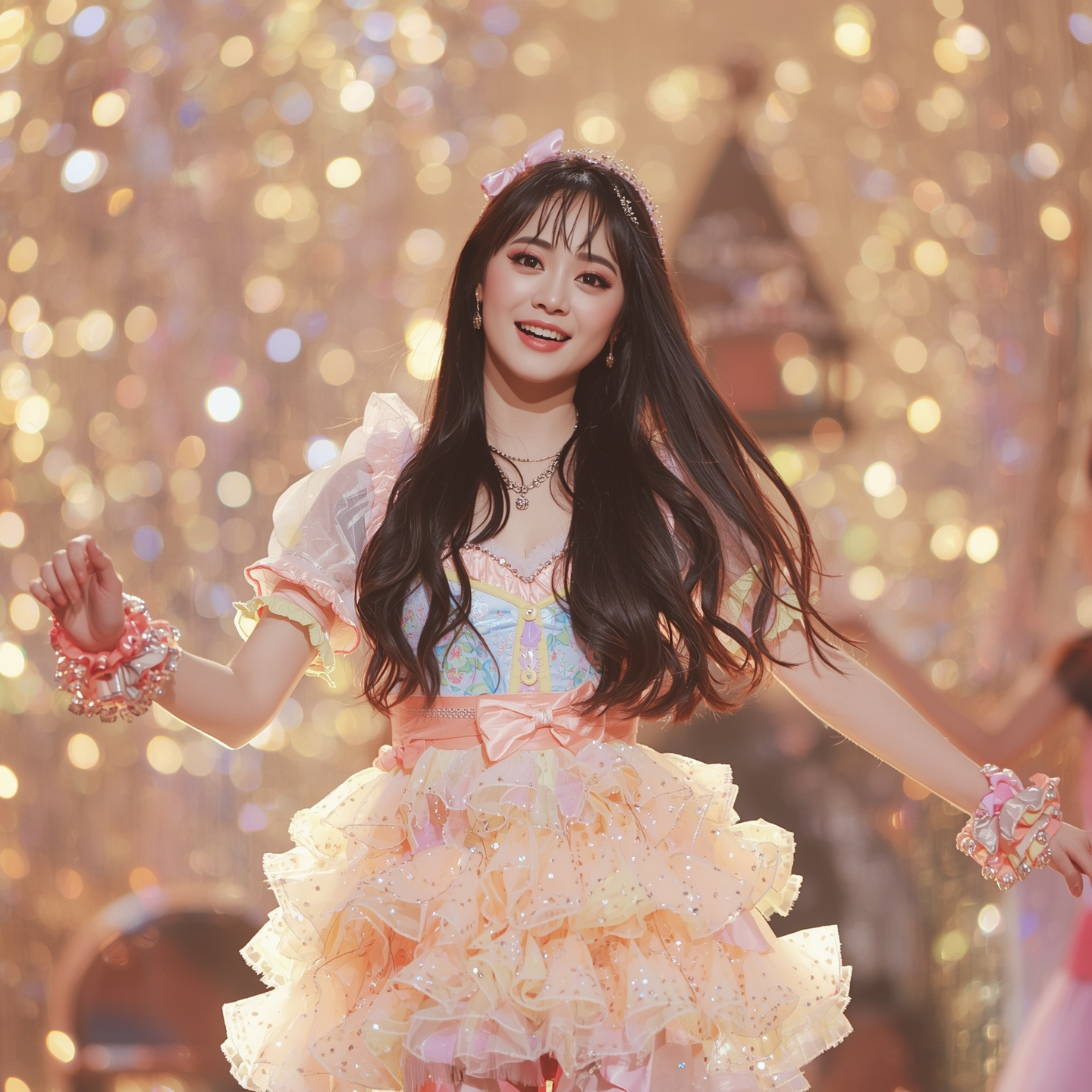
I’m not into J-pop but I’m a new fan of Ayumi Hamasaki!

“They have offended the feelings of 1.4 billion Chinese people!”
Who are they? Doesn’t matter. That’s the cry of the 五毛 and 网军.
Ayumi Hamasaki finally broke her silence — not with anger or excuses, but with photographs. Not fan selfies, not media stills, but full-production shots from inside Shanghai’s Oriental Sports Centre: 14,000 empty seats, lights blazing, the stage fully dressed, and Hamasaki singing to nobody, or rather, to everyone who wasn’t allowed in.
From her Instagram post, the set wasn’t some symbolic gesture. It was the real thing, complete with choreography, live band, costume changes, visuals, all the moving parts that had taken more than 200 Chinese and Japanese staff five days to assemble. The concert was ready. The show should have happened, but political revenge came in hard and heavy. The shows couldn’t go on.
Most artists in such situations disappear backstage and wait for the PR damage control team to arrange some polite phrasing. Hamasaki didn’t. She walked onto the empty stage and performed anyway. “With 14,000 empty seats but felt so much love… it was one of the most unforgettable show ever to me,” she wrote, her English earnest, unpolished, and unmistakably sincere.
Fans online immediately framed it as defiance, resilience and grace. As a decent and courageous human being, what else could she have done when hundreds of people, Chinese and Japanese, have spent days building something? It’s so wrong to just walk away.
While the venue emptied and disappointed ticket holders drifted into the Shanghai night, some gathered at a Hamasaki-themed café, a small “shrine” to late 1990s J-pop nostalgia. Photos uploaded later showed police cars parked discreetly outside. By the end of the night, café decorations were taken down. Even memory, it seems, now requires approval.
Across China, Japan, and everywhere else her fans still hum her old ballads, comments poured in, not about politics (because everyone knows what’s going on), but about solidarity, gratitude, professionalism, and a kind of quiet heartbreak. Ayumi Hamasaki thanked her team, her dancers, her crew, the people who built the stage which she never got to share with the audience. Not a single word about politics, but the message was loud and clear. Not surprisingly, the bullies and hooligans didn’t like it, pathetically defending the authorities actions. I often wonder to myself, are these people real? They must be made up of a very different kind of cells and tissues.
In another concert in Shanghai, Maki Otsuki was served a power cut mid-song. She was then ushered off the stage. A Chinese fan who was recording the footage repeatedly protested with the phrase 一刀切 (an indiscriminate action). Perhaps that’s the real voice of the Chinese people, but would that not get the speaker into trouble?
I’m not into J-pop but I’m a new fan of Ayumi Hamasaki!
[…] days ago, I posted about Japanese singer Ayumi Hamasaki’s cancelled concert. Guess how low the China Daily can go. They claimed that footage from the empty hall concert was […]