
Preemption, Hindsight, and the Strait of Hormuz
In August 2001, US intelligence had clear warnings about Osama bin Laden and Al Qaeda. The now-infamous Presidential Daily Brief titled “Bin Ladin Determined to Strike in US” highlighted Al Qaeda’s interest in hijackings and domestic targets. Flight schools reported suspicious students; earlier plots like the 1998 embassy bombings and the USS Cole attack hinted at clear and escalating intent.
If the United States had launched a decisive preemptive strike against Al Qaeda leadership and infrastructure that summer, the September 11 attacks—killing nearly 3,000 Americans—might never have occurred.
This is not just hindsight. There should have been better foresight. Most civilised people today wish we could turn back the clock and act but history doesn’t give second chances. Yet fast-forward to 2026 and a far more powerful adversary—Iran—is openly bent on America’s destruction, repeatedly threatening and chanting “death to America”, “death to Israel”. And they are backed by state resources Al Qaeda could only dream of. Do you think these folks are kidding? Would you sleep well if someone living across the road threaten your family this way? Wouldn’t you be more than a little nervous if you were Donald Trump?

Strange as it may seem to normal thinking people, there are plenty of self-loathing Americans, some even considered academics and intellectuals, who think that the chants led by the Iranian clergy must be interpreted in a different way.
US military actions against Iran, including the decimation of its navy, have drawn fierce criticism from some quarters, especially “woke” voices in America who blame Trump for escalation while ignoring the preemptive necessity. The current mess in the Strait of Hormuz is not random chaos but a predictable consequence of confronting a regime that has long played by terrorist rules. Let’s unpack this with data, historical parallels, strategic realities, and uncomfortable questions about who is really gaslighting whom.
The 9/11 Parallel: Missed Warnings and the Cost of Inaction
History rarely offers clean “what-ifs,” but the Al Qaeda case is instructive. Al Qaeda in 2001 was a decentralised terrorist network of perhaps a few thousand fighters, reliant on caves, safe houses, and sympathetic regimes for sanctuary. It had no navy, no air force, no ballistic missiles, and no sovereign territory to defend. Its attacks relied on asymmetric tactics: box cutters, hijacked planes, and suicide bombers. US policymakers eschewed military action due to legal concerns, fear of diplomatic incidents and a preference for law enforcement over military preemption. The result? 9/11.
Iran today is exponentially more dangerous. As a state actor with the Islamic Revolutionary Guard Corps (IRGC) as its spearhead, it commands a military-industrial complex far beyond Al Qaeda’s wildest ambitions. Pre-2026 conflict estimates placed Iran’s ballistic missile arsenal in the thousands, its drone fleet in the hundreds (many exported to proxies like the Houthis), and its naval forces—including speedboats, submarines, and anti-ship missiles—designed explicitly for asymmetric warfare in the Persian Gulf.

The IRGC Navy specialised in swarming tactics, mines, and coastal defenses to choke the Strait of Hormuz. Iran has sponsored attacks killing hundreds of Americans over decades: from the 1983 Beirut barracks bombing (241 US service members) through proxy militias in Iraq that killed over 600 US troops with explosively formed penetrators, to recent proxy strikes via Hezbollah (Lebanon), Hamas (Gaza), and the Houthis (Yemen). “Death to America” remains official rhetoric. Unlike Al Qaeda, Iran has nuclear ambitions, oil wealth, and a network of proxies across the Middle East. The woke must be either very ignorant or think that their own country deserved to be attacked.
Here’s the thing. If preemption against a weak Al Qaeda was retrospectively desirable, how much more so against a regime many times stronger? Trump’s strikes, being part of broader objectives outlined in early 2026 to degrade missiles, sever proxy ties, and prevent nuclear breakout, directly addressed this. The Iranian navy was effectively annihilated: over 130 vessels sunk, minelayers destroyed, and coastal launch sites hit. This wasn’t unprovoked aggression; it responded to Iran’s closure of the Strait of Hormuz and threats to global shipping following escalated conflict. Yet critics frame it as Trump’s recklessness even though history has clearly demonstrated that inaction against existential threats invites worse outcomes. Deterrence saved lives in the past (think Reagan’s Libya strikes); hesitation enabled 9/11.
The Strait of Hormuz Crisis: Not Trump’s Mess, but a Predictable IRGC Playbook
The current situation in the Strait of Hormuz—mines, drone boats, rocket-armed vessels, and disrupted shipping, is messy but not random. Trump’s expectations for his stingy and timid allies are not unreasonable.
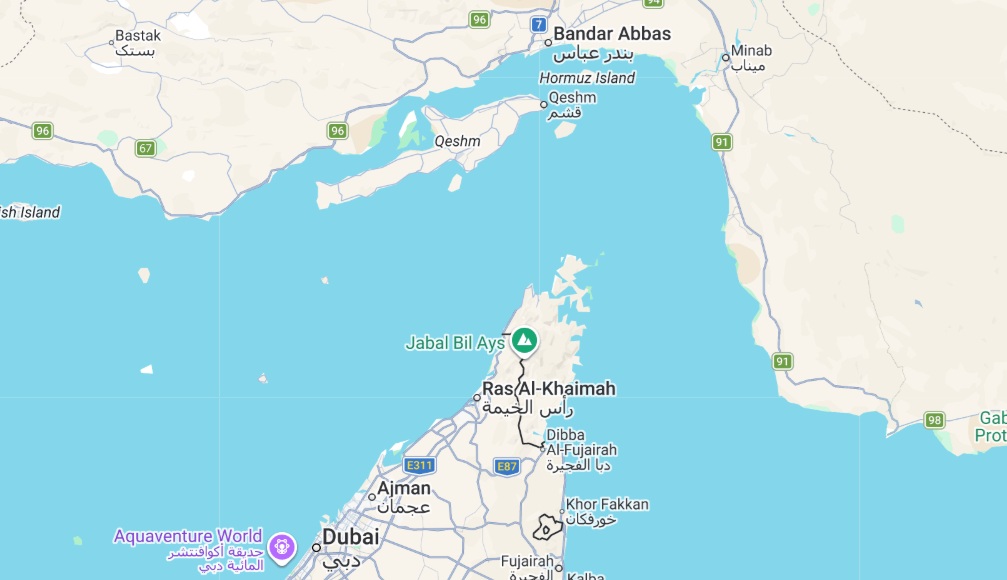
Iran declared the Strait of Hormuz “closed” in March 2026 amid the conflict, laying mines and attacking transiting ships. This followed US and Israeli strikes that had already degraded Iranian capabilities. The IRGC has since demanded coordination or payments for “safe passage,” with reports of tolls reaching up to $2 million per vessel (often in yuan or crypto to evade sanctions). One lawmaker openly called it a “new sovereign regime” to recoup war costs. This is classic extortion: a protection racket dressed as sovereignty.
Data underscores the stakes. The Strait of Hormuz handles about 20-21 million barrels of oil per day. That’s roughly 20-25% of global seaborne oil trade, plus significant LNG from Qatar and the UAE. Disruptions spike insurance premiums, reroute vessels, and the effects on costs and duration ripple through energy markets. Unknown to ignorant folks who share the following cartoon, the US is not affected by the closure of the Strait of Hormuz.

US imports via the strait averaged just 400,000-500,000 barrels per day in 2024-2025 (about 7% of crude imports and 2% of total petroleum consumption), thanks to domestic production surges making America a net exporter. Most flows go to Asia (China ~38%, India ~15%, etc.). The US does not “need” the strait for its own energy security.
Trump (who laid the groundwork) has rightly called for European navies and others to assist in mopping up mines and neutralising remaining threats. Why should America shoulder the full burden indefinitely? Most of Europe has responded with high insurance costs or, in some cases, tacitly allowing payments, effectively funding the very terrorists they wish they could condemn without angering a certain segment of their societies. Rightly, the EU has rejected formal tolls, considering them unlawful under UNCLOS (United Nations Convention on the Law of the Sea), yet they buckle under practical realities and the fear of committing warships. Ships pay to sail, or they don’t sail. Sounds more like fear than stinginess.
Trump’s disappointment is understandable. His position that the US won’t indefinitely subsidise Europe’s energy security while Iran extorts money from Asian and European countries, is just pragmatic and not isolationist, given that this extortion has been going on intermittently for years before the war.
Some folks are simply unaware how wrong they are to blame the closure of the Straits of Hormuz on Trump’s attacks. Look here. Harassment and extortion in the strait have been going on for the longest time. It has been a constant thorn in the side of international shipping. Trump has done the bulk of the work to change the game by destroying the main force of the Iranian navy. Isn’t it reasonable for him to expect countries benefitting from the elimination of the bandits to finish up the job? Why do people expect him to spoon-feed them? Why do people think that he’s going in randomly and recklessly?
Singapore, Malaysia, and the Principle vs. Pragmatism Divide
Closer to home for many readers, Singapore’s Foreign Minister Vivian Balakrishnan delivered a clear-eyed statement: the Strait of Hormuz, like the Straits of Malacca and the Strait of Singapore, is governed by the right of transit passage under international law. It is not a privilege Iran can grant or withhold, nor a toll to be negotiated. Singapore will not supplicate or pay for what is a legal right because doing so erodes the principle that keeps vital sea lanes open globally. I may not be very happy about how the Ridout Road saga concluded, but on this, Vivian B is dead right. Trump’s game-changing plan protects not just Singapore-flagged vessels but the rules-based order that underpins global trade.
Why then, have some Singaporeans echoed Malaysian critics? Malaysia pragmatically engaged Iran through “diplomatic channels” (hahaha) and secured passage for some vessels ($$$), prioritising short-term energy security over principles. Malaysian politicians framed Singapore’s stance as “lecturing” or insensitive to Muslim-majority neighbours’ concerns.
Well. It’s their choice to pay the ransom, but endorsing extortion sets a dangerous precedent. If Iran can levy $2 million “tolls” today, what stops similar demands elsewhere? Is it right for a regime that arms terrorists to monetise a global chokepoint? The IRGC’s gaslighting, claiming that Trump “made them do it” by striking first, ignores decades of Iranian provocations, proxy wars, and nuclear brinkmanship. If Iran manages to deliver a 9/11, it would be exponentially more devastating than that unleashed by Al Qaeda in 2001.
The Woke Blind Spot: Standing with Iran While Ignoring American Lives
Perhaps most baffling is the domestic US reaction. Segments of the left and progressive circles have rushed to blame Trump, framing strikes as warmongering rather than life-saving deterrence. Protests, op-eds, and social media amplify narratives that Iran’s response was “understandable” or that US actions “provoked” the strait crisis!
Yao mo gao chor ah? This echoes post-9/11 revisionism but inverted. Instead of unity against terrorists, some cheer (or at least excuse) the real aggressor. I dread imagining a 9/11 in today’s polarised climate. Would certain voices celebrate Osama bin Laden as “resistance”? Oh, by the way, I don’t like George Bush either. I didn’t support a full-scale Afghan war and felt that Osama should have been “decapitated”.
Anyway, nuances matter. Military action carries costs: escalation risks, civilian casualties, global oil volatility, and strained alliances. Diplomacy must still be on the cards (talks in Pakistan). Sadly for the Iranian diaspora, regime change wasn’t fully achieved (at the moment). Yet the alternative of allowing the regime to perfect its arsenal unchecked mirrors the 1990s hesitation that enabled Al Qaeda. Much as he annoys me, Trump’s moves align with realism: degrade the regime’s capabilities now to prevent worse attacks later. Why are people whose lives are at stake betting on the mullahs’ threats being unreal?
The woke movement began as a righteous call to give a voice to the downtrodden. Nothing wrong with that, but what happens if a certain group of people glorify martyrdom? What if murderous cults demand for their rights? The more people die, the more sympathy they can milk from the truly naive and not so naive woke who fight for the beaten without understanding why they were beaten.

It’s not just blood and gore in this episode. Kudos to the sleuths out there. The glam grandniece of slain Iranian terror mastermind General Qasem Soleimani frequented several US hotspots and lived a lavish life in LA before being scooped up by ICE (much hated by the woke) last Friday.

Sarinasadat Hosseiny, 25 and her mother, Hamideh Soleimani Afshar, were arrested after the State Department terminated their permanent resident status and had their green cards revoked due to her ties to the terrorist Iranian regime.
The 25-year-old terror scion’s social media showed she’s enjoyed a luxurious, vacation-centric lifestyle while living in the country her mother referred to as the “Great Satan.”
Instagram posts show that Hosseiny has recently traveled to Miami where she posed with drinks; to Alaska, where she still managed to take snaps in a bikini; and Las Vegas, where she attended an F-1 race. Other posts show Hosseiny donning skin tight dresses, barely-there bikinis, and skirts well north of the knee. Hosseiny was first admitted to the US on a student visa in 2015 and was given a green card by the Biden administration in 2023.
Both Afshar and Hosseiny were arrested in Los Angeles, with the State Department citing the mother’s “unflinching support for the Iranian Revolutionary Guard Corps”. This is more than just hypocrisy. This is having your cake and eating it. Not only that, it’s like eating your cake while telling your devotees that they should fast till they die. And the woke have been buying it!

And you might think that a scandal like this may wake the ignorant woke up. Don’t be so sure and don’t be surprised if the “Palestinian” condemning Israel and America on social media is actually a naturalised American frolicking on a beach in California guzzling beer, eating bacon and ogling scantily clad women.
Look at how miserably Israel performed in the court of public opinion even though the war on the ground was decidedly won. And here lies the uphill challenge to folks who are used to winning and reporting facts and evidence in a traditional and systematic way. We now live in an age of anti-intellectualism. People trust health gurus more than they trust doctors. People decide right and wrong, good or bad from a 10-second video. The winner on the ground can’t win the war on social media this way! Not when the opponent thrives on showing how he has been pummeled and battered by the big bad winners. Instead, those who shout virtue-signaling slogans, post tear-jerking images and create misleading AI images and videos that go viral are the ones who win the most supporters even when they lie through their teeth.
Not surprisingly, after marathon talks between the US and Iran, they failed to reach an agreement to end their war on Sunday in the Pakistani capital Islamabad. The ceasefire is doomed and each side blamed the other for the failure of the 21-hour negotiations to end fighting that has killed thousands, roiled the global economy and sent oil prices soaring since it began more than six weeks ago. The details are sketchy, but I can bet my last dollar that the issue of unfreezing US assets belonging to the Iranian elite is not being settled.

Implications: Deterrence Saves Lives, Principles Protect Prosperity
It’s time for the woke to wake up but I’m not optimistic. The Strait of Hormuz crisis highlights broader truths. Global trade depends on secure sea lanes. Extortion by rogue states raises costs for everyone (higher gas prices, inflation, delayed goods). Europe and Asia bear the brunt economically, yet they have the cheek to expect the US to contribute all the muscle. What if the “evil” Americans go at it alone, manage to “sanitise” the Strait of Hormuz, secure it and give international shipping freedom that countries have never seen before? Are they going to thank Trump and feel bad about not contributing? Or are they going to continue paying 2 million bucks per vessel even when they don’t have to?
Before anyone accuses me of being a Trump fan, I state for the record that I don’t like him at all. In fact, I hate it when he talks nonsense and puts up a show for the cameras. He was a star on a reality show and in many ways, he’s still behaving like one. Does it matter? Well, not when he is a very important countermeasure to a woke-ravaged and Islamised West.
If 9/11 taught us anything, it’s that threats and warning signs that have been ignored will ultimately metastasize. Iran is Al Qaeda on steroids: state power, powerful friends (China and Russia), advanced weapons, ideological zeal, and a track record of targeting Americans. Trump’s preemption, though presumptuous, buys time and deters future harm. Critics blaming him overlook history’s clearest lesson: sometimes, acting decisively prevents catastrophe. The alternative? More hindsight regrets.