
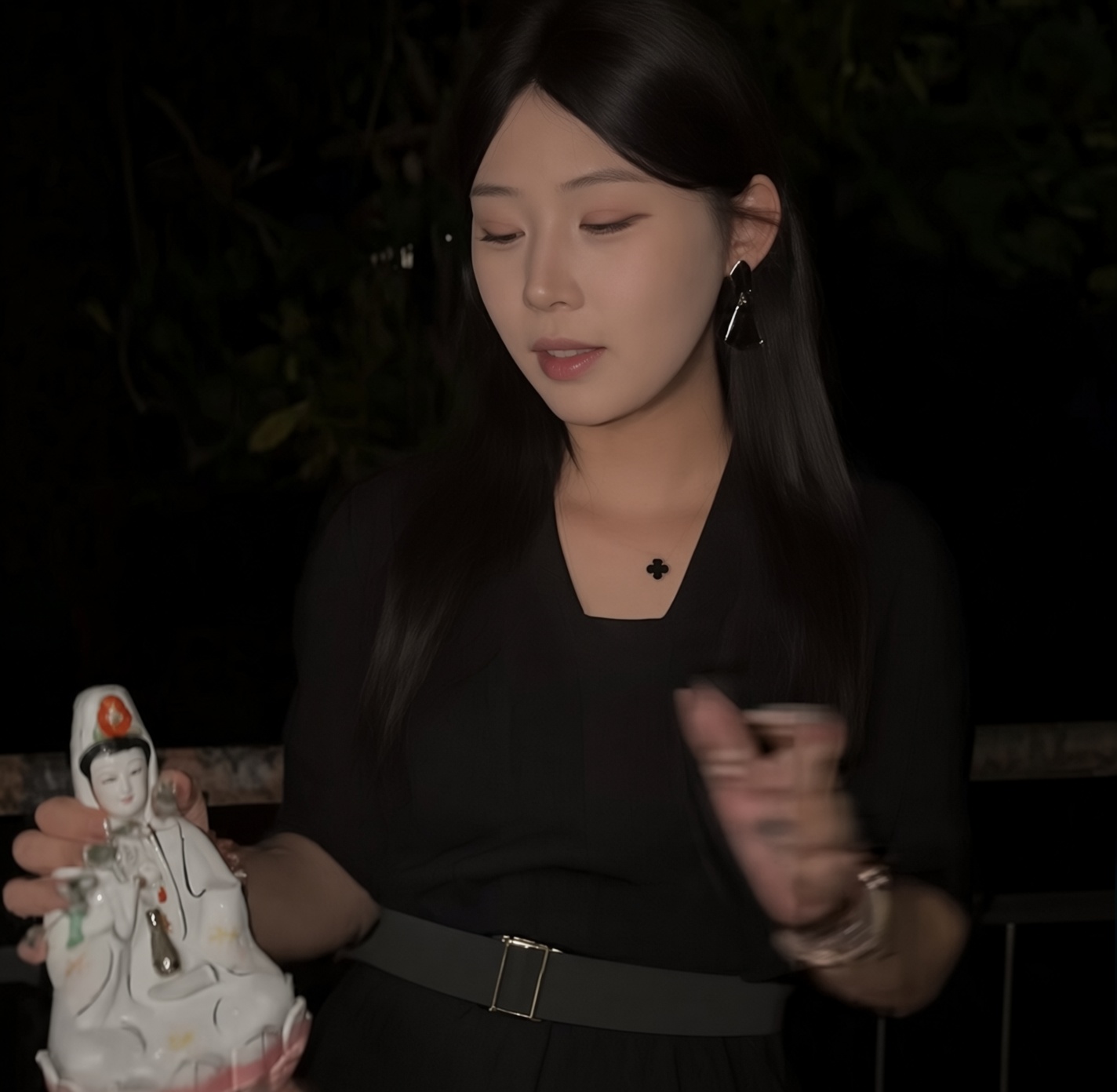
When You Smash a Guanyin statue, Die in a Car Crash and the Internet Becomes a Fortune Teller
So a 24-year-old Chinese Douyin/Rednote creator called Jiang Xiaorou 姜小柔 has died after a serious car accident. She specialised in ghost-hunting, abandoned buildings and the kind of anti-superstition stunts that make pious aunties clutch their amulets and chant 阿弥陀佛. One of her more famous clips involved taking a pair of pliers to a Guanyin statue and basically doing an Ai Weiwei with it.
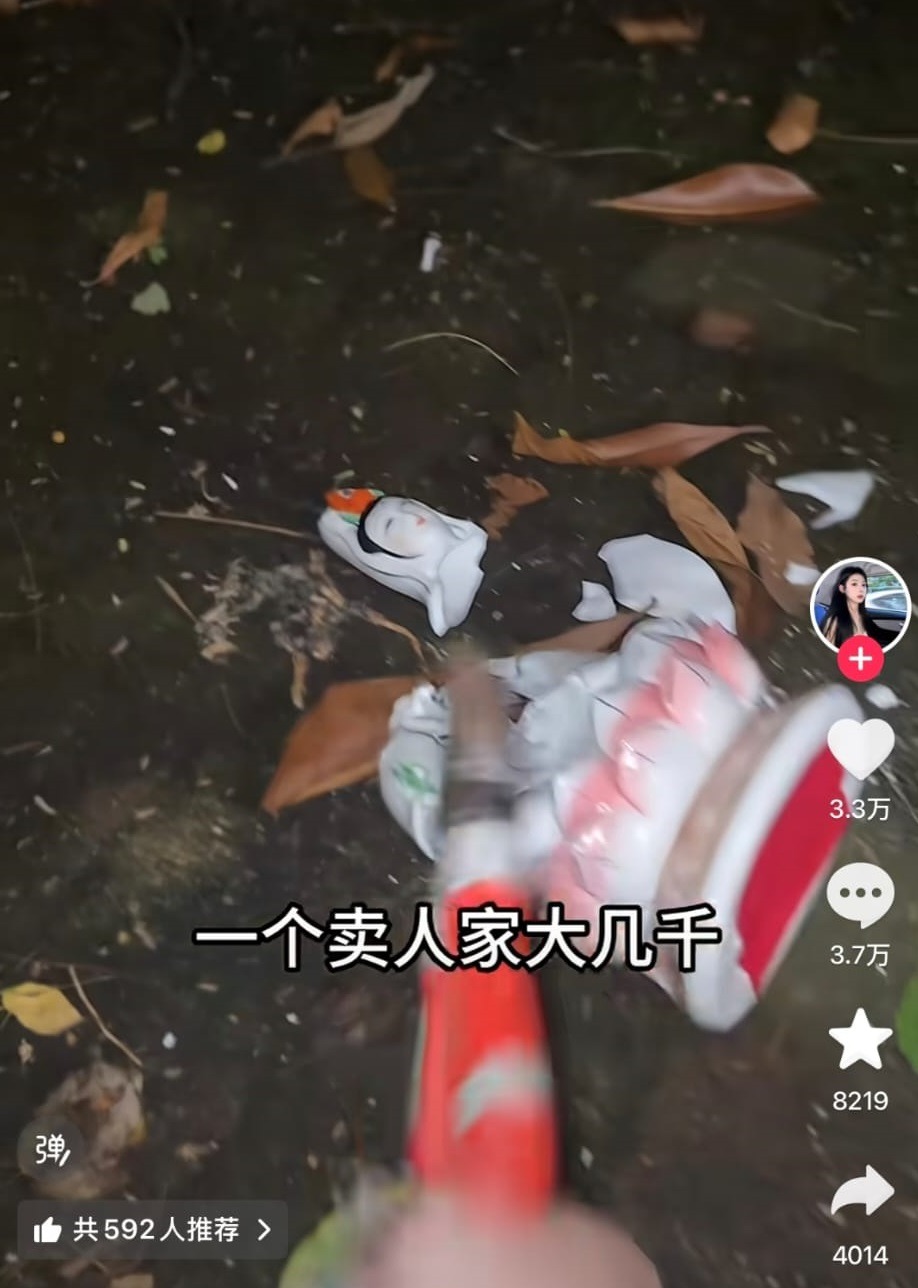
Months later, passenger in a rideshare, early hours, crash, severe injuries, weeks in ICU, dead at 24. Cue the online chorus: “Karma.” “She offended the spirits.” “See? You cannot simply smash sacred things and expect to walk away unscathed.” The video resurfaces, the comments fill with knowing nods, and suddenly a tragic road accident becomes “spiritual proof”.
So charmingly consistent, predictable and I remain unconvinced.
You see, our brains are pattern-making machines with a side hustle in storytelling. Something dramatic happens after something else dramatic and the temporal sequence gets promoted to causation faster than a knee jerk. The Romans had a phrase for it. Your grandmother has a version that involves black cats and open umbrellas. Modern comment sections just update the software.

Miss Jiang smashed a statue → later died in a crash → therefore the smashing caused the crash. Never mind that millions of people disrespect religious objects every year and continue breathing. Never mind that car accidents kill people who have never touched a Buddhist figurine in their lives. Never mind base rates, traffic density at 3 a.m., driver fatigue, road conditions, or pure statistical bad luck. The narrative is more satisfying than the messy truth, so the narrative wins.

It is the same mental move that turns every unexpected death after vaccination into “the vaccine did it.” Someone gets the jab, later suffers a heart attack, stroke, blood clot, or simply dies of something that people have always died of, and a certain corner of the internet treats the sequence as a smoking gun. The fact that billions of doses have been given and the overwhelming majority of recipients go on living ordinary lives somehow becomes less interesting than the handful of tragic coincidences that can be lined up in a thread.
Coincidence is not evidence. Selective attention is not science. And “it happened after, so it happened because” is the intellectual equivalent of deciding that the rooster’s crowing makes the sun rise.
There is something almost poetic about the symmetry. An anti-superstition influencer dies, and the superstitious immediately claim victory. The universe, in their telling, has delivered a punchline. It is tidy. It is moralistic. It allows people who never liked her content to feel vindicated without having to produce a single scrap of actual causal evidence.
The same psychological comfort operates in the vaccine conversation. Unexpected death is terrifying precisely because it is often random and unfair. Linking it to a concrete prior event — a jab, a smashed statue, a broken mirror — restores a sense of order. The world is no longer indifferent; it is keeping score. Someone must have done something. There must be a reason. Preferably a reason that confirms what you already believed.
This is why the same people who demand rigorous randomised controlled trials for everything else will accept a TikTok montage of tragic anecdotes as sufficient proof when it suits the narrative. Evidence standards are flexible when the story feels good.

Imagine the opposite. Suppose Jiang had smashed the statue and then lived to 97, dying peacefully of old age while surrounded by grandchildren cradling the next generation. Would the internet have erupted with “See? The spirits don’t care!” Of course not. That outcome is boring. It does not trend. The null result gets ignored; only the confirming anecdote gets amplified. This is how superstition (and its modern cousins) maintain themselves. They keep the hits and discard the misses.
The same filtering happens with vaccines. People who receive them and experience nothing dramatic do not make viral videos. The ones who later suffer unrelated misfortune do. Confirmation bias does the rest.
Smashing religious statues for content is, at minimum, rude and attention-seeking. Many people found it genuinely offensive. That is a separate conversation from the question of whether porcelain + hammer = cosmic death sentence months later via rideshare. You can disapprove of the stunt without turning a traffic accident into theological evidence. The two claims are not a package deal.
Likewise, you can have legitimate questions about vaccine safety, adverse event reporting, or risk-benefit calculations in specific populations without treating every subsequent death as a conspiracy. Serious pharmacovigilance exists for a reason. Anecdotal “he got the jab and then died” threads are not it.
The unsexy reality is, people die. Young people die. Influencers die. Vaccinated people die. Unvaccinated people die. People who smash statues die. People who bow statues and offer oranges also die. The universe is not obliged to protect the pure of heart or punish the provocative on a convenient timeline. Road accidents remain the most efficient ways for ordinary bad luck to express itself in China.

If your model of reality requires every unexpected death to be cosmic feedback on prior behaviour, then congratulations: you have invented a very elaborate form of magical thinking that happens to look a lot like the superstition the late influencer was trying (however clumsily) to challenge. The more interesting question is not whether the spirits got her. It is why so many of us still prefer a spooky story to the simpler, colder explanation that sometimes the car just crashes.